
Budget 2027: protect the service, not the spreadsheet
Ireland's minimum wage rises to €14.94 in 2027, but the real payroll cost is higher. How hotels can absorb it through efficiency, not cutting service

Budget 2027 put 79 cent on Ireland's national minimum wage, taking it from €14.15 to €14.94 an hour from 1 January 2027. For a full-timer on 39 hours, that's about €1,602 a year in extra pay before employer PRSI.
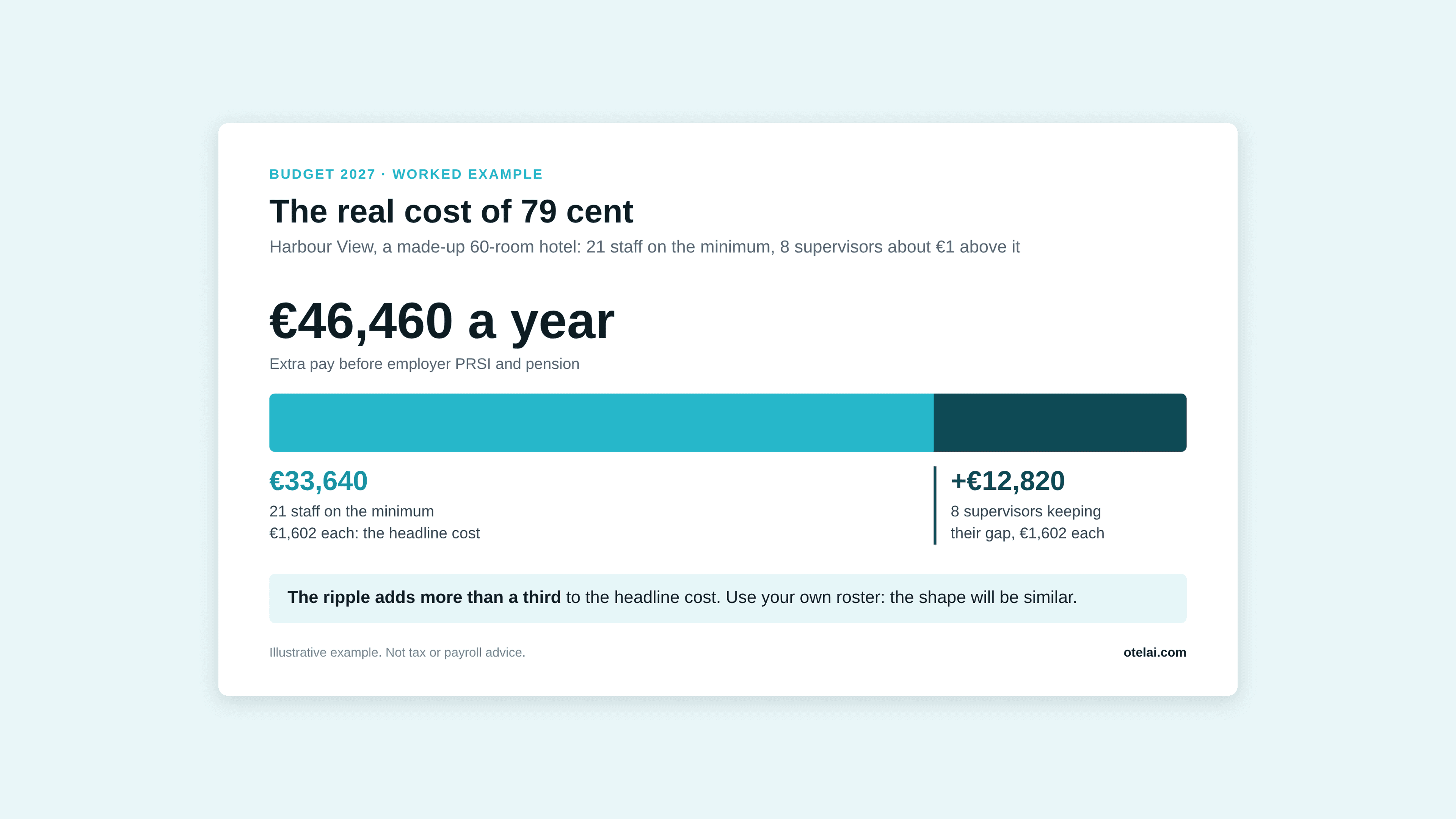
That's the headline. The number that lands in your payroll budget will be bigger. When the floor rises, everyone standing just above it expects to rise too.
The easy fix is fewer people or fewer hours. It balances the spreadsheet, but it costs you the service your guests come back for. There's a better answer, and it starts with how your hours are spent, not how many you can cut.
What changed in Budget 2027
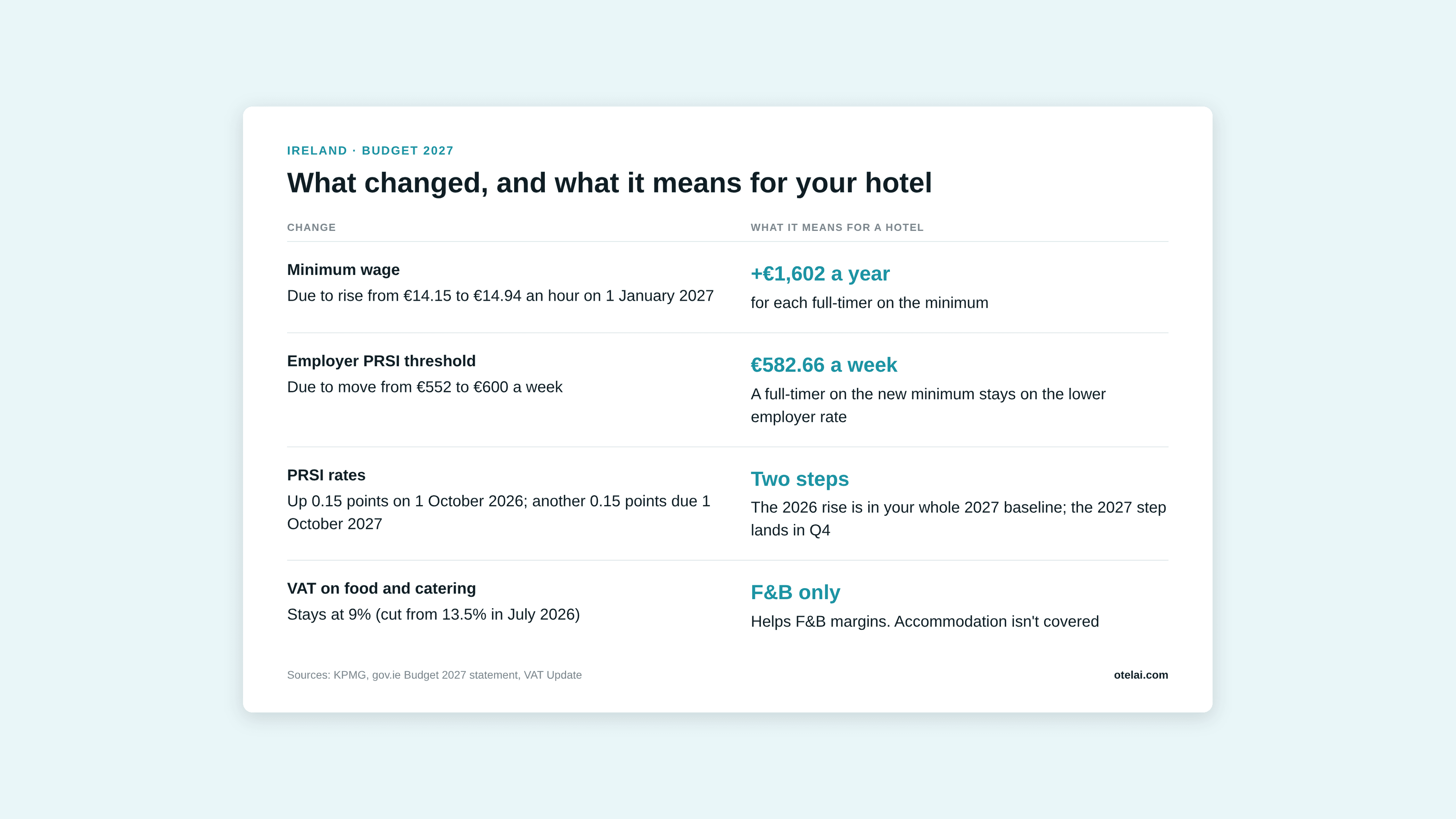
Sources: KPMG (minimum wage and PRSI), Budget 2027 statement (PRSI threshold), VAT Update (VAT).
The 9% VAT rate is welcome, but it eases your F&B line, not your payroll. The wage rise still has to be absorbed somewhere.
Why the real increase is bigger than 79 cent
The rise is 5.6% on the minimum, but it doesn't stop there. Three things push it further.
The ripple. Your supervisors, senior room attendants and experienced kitchen staff are paid "a bit more" than the minimum for a reason. When the floor rises 79 cent, they'll want their gap back, and you'll want to keep them.
The PRSI cliff. A full-timer on the new minimum earns €582.66 a week, about €17 under the €600 threshold. That's just over an hour of extra paid time. Go over it and the higher employer rate applies to that week's whole pay, about €13.50 extra each time, or about €700 a year if it happens every week. Regular overtime can tip people over without anyone noticing.
Pension auto-enrolment. My Future Fund adds an employer contribution on top of gross pay for staff who are enrolled, so every euro of the rise carries a little more with it.
Take Harbour View, a made-up 60-room hotel with 21 people on the minimum and 8 supervisors paid about €1 above it.
The easy answer, and what it costs you
When payroll goes up, the quickest fix is to cut heads or trim hours. The spreadsheet balances by Friday.
But the best hotels don't aim to meet their star rating. They aim past it. A good 3-star wants guests to leave feeling they had a 4-star stay. A 4-star holds itself to 5-star standards, and its team is proud of that.
That gap between the rating and the experience is the brand. It's what earns the review, the repeat booking and the rate you can charge. It's also made of people: the room that's ready on time, the bar that isn't short-staffed on a Friday, the front desk with time to remember a name.
Cut the people and you close the gap. The saving shows up this year. The cost shows up in reviews and rate next year.
So the real question for your 2027 budget isn't how to spend less on people. It's this: how do you get the same service, or better, from the hours you already pay for?
The answer is efficiency
In most hotels the rate isn't what moves payroll during the year. Hours are. A rota that runs a little over, every week, quietly costs more than the wage rise.
Harbour View's housekeeping team is about six full-time staff, roughly €186,000 a year in pay. Every 1% of hours that runs over the rota costs about €1,860 a year.
That adds up quickly. A 3% drift is about 15 minutes per attendant per shift: waiting on a late check-out, or a room that took longer than planned. It costs about €5,600 a year. At 10%, around 45 minutes a shift, it's €18,600, or 40% of the whole wage increase, from one department.
Winning those hours back doesn't mean fewer people. It means the hours you pay for go where guests feel them, not into waiting for rooms to free up or cleaning rooms that didn't need a full service.
You already have most of what you need to measure it. Housekeeping knows the minutes a room takes. The PMS knows who's arriving, who's staying and who's leaving. The rota knows who's on. The problem is that these numbers sit in separate systems and only meet in a spreadsheet after the month has closed. By then the overrun is already paid.
Where AI earns its place: a stack that connects
The opportunity isn't another system. It's a layer that reads the ones you already run as one hotel and turns the numbers into a decision while there's still time to act.
Housekeeping is the clearest example. Today's workload isn't the rooms you sold. It's the rooms that actually need cleaning, and that changes through the day:
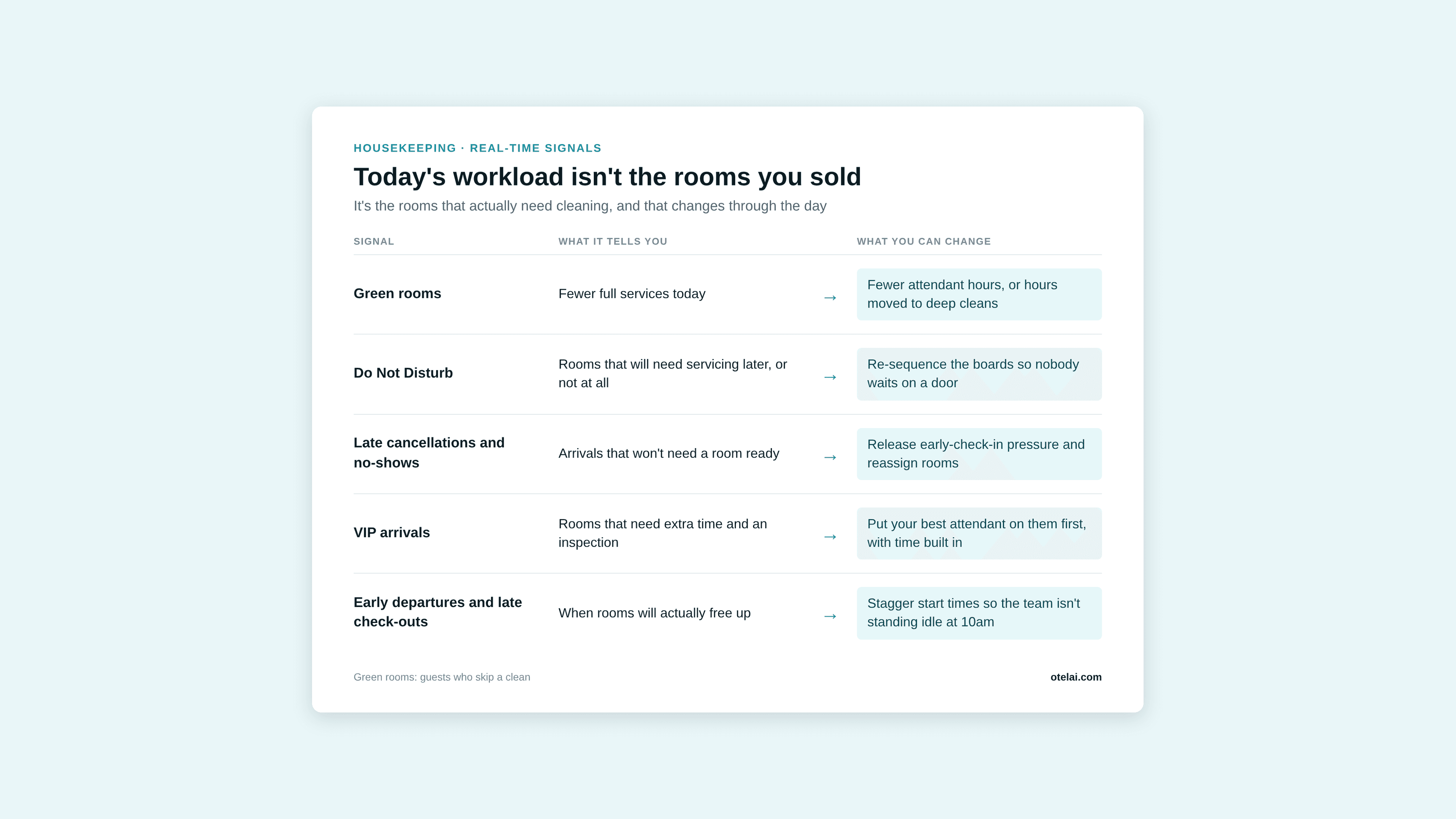
Each of these is small on its own. Together they decide whether today's rota fits today's hotel. A connected stack sees them as they happen and tells the head of housekeeping what to change, not what went wrong last month.
The same logic runs across the hotel: bar staffing against covers booked, front desk against arrivals by hour, banqueting against confirmed numbers.
How Otel does it
Otel connects the systems your hotel already runs, including legacy ones with no API, and reads them as one hotel. Nothing migrates and nothing gets replaced. Here's what that looks like for payroll in 2027:
- Labour variance, the week it starts. "Bar labour 5.2% over target, 3rd day. Routed to Conor for sign-off." You see the drift while it's small, not after month-end.
- Roster review against revenue. "Three extra staff, no revenue lift." Otel checks the rota against what the business is actually doing.
- Payroll drift by department. Rostered against actual hours, every department, without the manual join of rota, payroll export and PMS.
- Cost per occupied room, tracked nightly. So housekeeping efficiency is a number you watch, not a guess.
- Before the shift. Tonight's arrivals, VIPs and gaps, delivered before the team comes on. "VIP arrival 3pm, Mr Chen. Briefed the desk with preferences."
- Ask anything, on your own data. "Why is housekeeping over this week?" Every answer shows its working, so you can trace any number back to the system it came from.
Nothing changes without your yes. Otel flags the decision and makes the case; your team makes the call.
Payroll data is sensitive, so ask any supplier how they protect it. Otel is ISO 27001 certified, SOC 2 Type II compliant and GDPR compliant.
Talk to us about where to start →
Before you sign off the 2027 budget
- List who sits within about €1 of the new minimum. Budget the ripple, not just the rise.
- With your payroll provider, check who works regular overtime near the €600 PRSI threshold.
- Pull last year's rostered and actual hours by department and by month. The gap is your efficiency budget.
- Tie hours to the occupancy you've budgeted, so payroll moves when rooms revenue does.
- Re-cost from 1 October 2027 for the next PRSI step.
Already signed off your budget? Read Your 2027 hotel budget: what it might be missing for the lines that tend to slip through.
Continue reading
Related articles

Your 2027 hotel budget: what it might be missing
A second look at your 2027 hotel budget: seven lines that slip through, and how to add AI mid-year with a clear, provable return on investment.
 Tadhg McNealy·4 Nov 2026
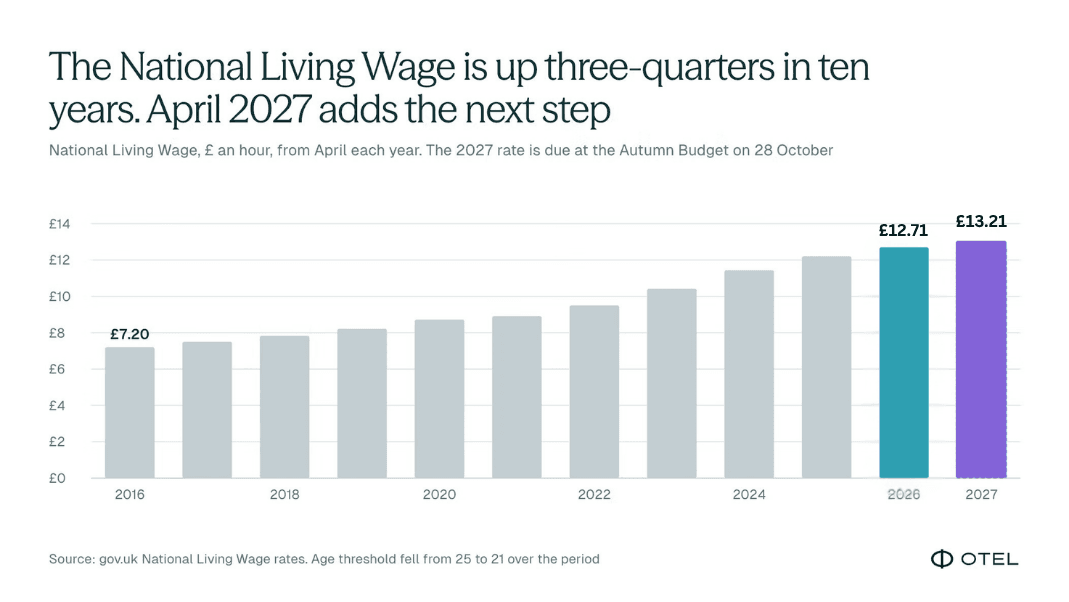
Why the UK 2027 Living Wage Hike Won't Break Your P&L (Rota Drift Will)
The 50p Illusion: Why Rota Drift Costs Hotels More Than the Living Wage Rise. Otel AI unifies your PMS and scheduling data in real time, catching payroll drift as it happens and putting decisions directly into your managers' hands.
Tadhg McNealy·28 Oct 2026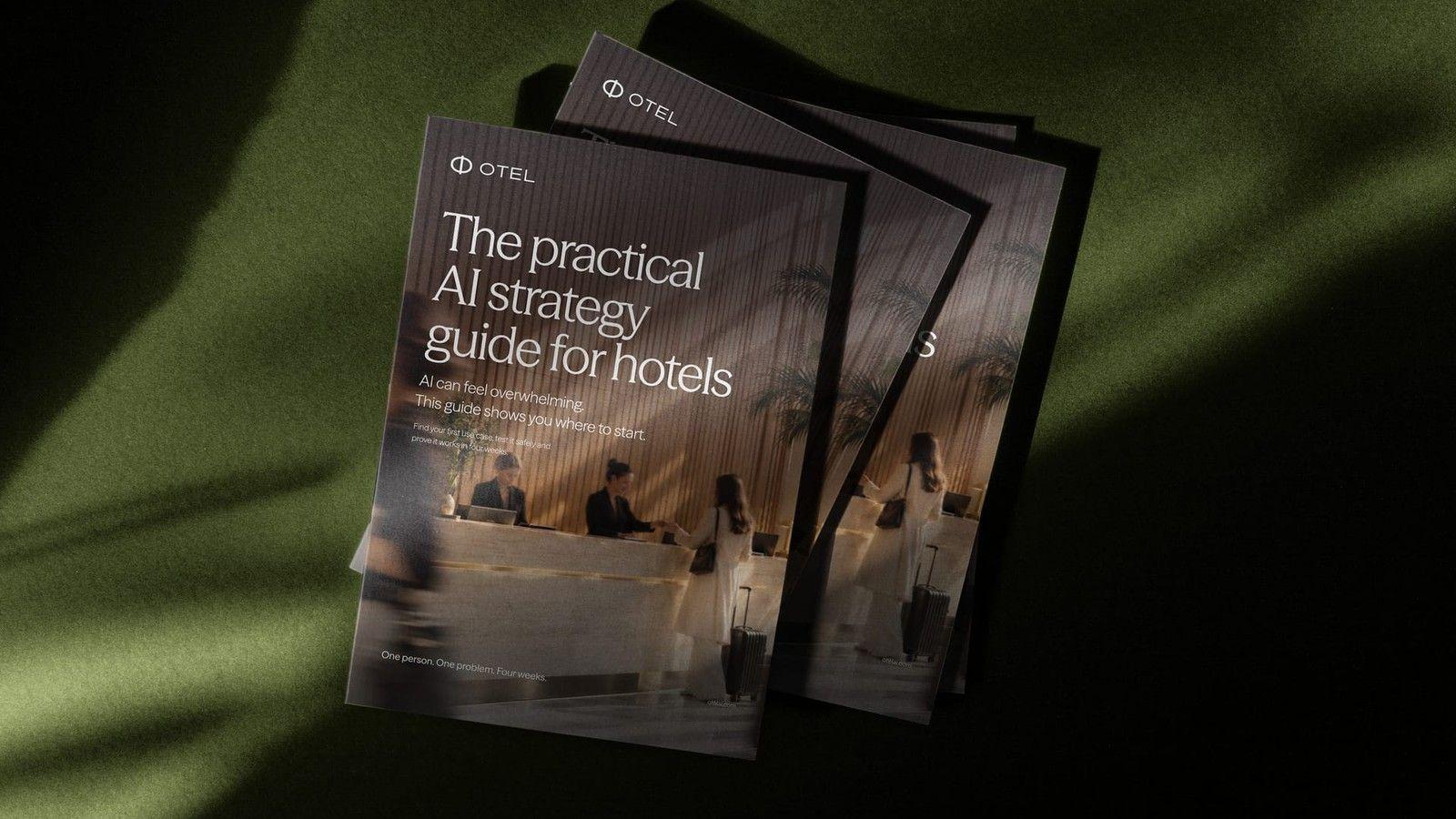
The practical AI strategy guide for hotels: the 2027 edition
The practical AI strategy guide for hotels is out as the 2027 edition. It answers one question: where do you start? Find the work, choose one use case, prove it in shadow for four weeks, then decide from evidence. Ten print-ready templates come with it.
Tadhg McNealy·22 Oct 2026