
Why the UK 2027 Living Wage Hike Won't Break Your P&L (Rota Drift Will)
The 50p Illusion: Why Rota Drift Costs Hotels More Than the Living Wage Rise. Otel AI unifies your PMS and scheduling data in real time, catching payroll drift as it happens and putting decisions directly into your managers' hands.

On 1 April 2027, the UK National Living Wage will increase to £13.21 per hour—a £0.50 increase from £12.71. On paper, that sounds manageable: an extra £1,014 per year in gross pay for a full-time 39-hour employee. However, hoteliers know the real threat to your bottom line isn’t the headline 50p.
It’s the hidden domino effect inside your rotas.
- True employment costs must factor in National Insurance and auto-enrolment pension and that adds up to £1197 per employee.
- If entry-level employee gets a raise, will your senior staff be happy if they don’t?
- The real silent killer is the unmonitored rota drift when some departments run over the rostered hours.
The Cash is Already Gone
Traditionally, hotels rely on different systems to carry out different functions. By the time the financial controller sits down with the General Manager to review the monthly margin, the cash is already gone. You discover that on three consecutive rainy Wednesdays, occupancy dropped by 18%, but F&B and housekeeping ran at full scheduled rosters—generating unrecoverable overtime.
This is why an AI layer makes the difference: it reads every system your hotel already runs as one unified operation. It hands each team its decisions with the case already made. It shows payroll drift by department as it happens, and you can ask any number where it came from.
Interested in finding out more? Contact Otel AI.
Continue reading
Related articles

What is a hotel pickup report? How to read one
A pickup report shows how many room nights and how much room revenue you've gained or lost for each future night since you last looked. It compares two snapshots of what's on the books, so it measures movement rather than position. Read it by stay date first, then by segment and channel, and you'll know whether those seven rooms are worth celebrating.
 Tadhg McNealy·11 Nov 2026
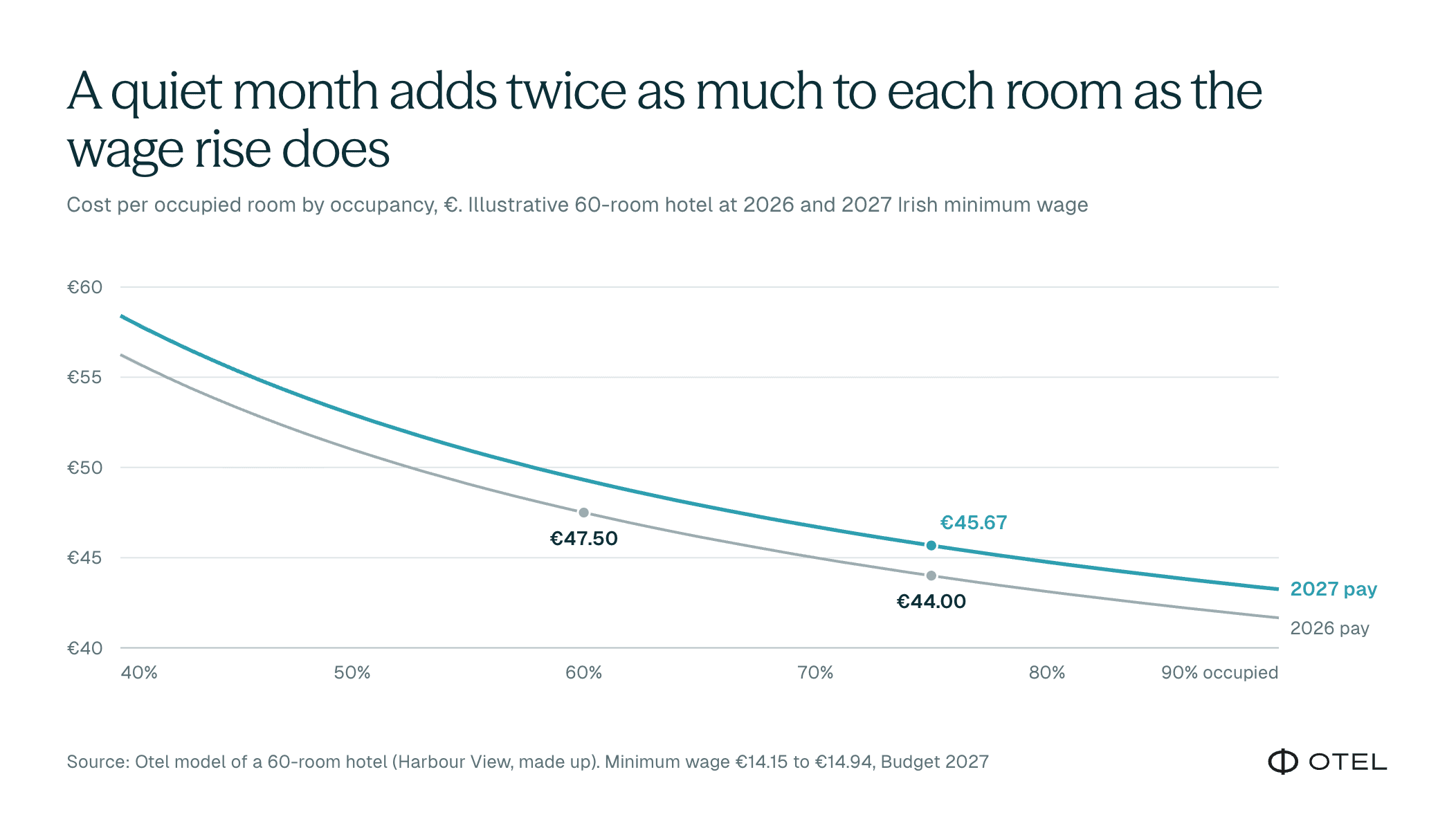
Cost per occupied room (CPOR): what it is, and why it rises in quiet months
Cost per occupied room is what it costs your hotel to sell one room for one night. Add up what the rooms department cost for a period and divide it by the occupied room nights. It tells you whether each night you sell is getting cheaper or dearer to deliver, which total spend on its own won't show you.
Tadhg McNealy·10 Nov 2026
Your 2027 hotel budget: what it might be missing
A second look at your 2027 hotel budget: seven lines that slip through, and how to add AI mid-year with a clear, provable return on investment.
Tadhg McNealy·4 Nov 2026