
Why the UK 2027 Living Wage Hike Won't Break Your P&L (Rota Drift Will)
The 49p Illusion: Why Rota Drift Costs Hotels More Than the Living Wage Rise. Otel AI unifies your PMS and scheduling data in real time, catching payroll drift as it happens and putting decisions directly into your managers' hands.

On 1 April 2027, the UK National Living Wage will increase to £13.20 per hour—a £0.49 increase from £12.71. On paper, that sounds manageable: an extra £994 per year in gross pay for a full-time 39-hour employee. However, hoteliers know the real threat to your bottom line isn’t the headline 49p.
It’s the hidden domino effect inside your rotas.
- True employment costs must factor in National Insurance and auto-enrolment pension and that adds up to £1170 per employee.
- If entry-level employee gets a raise, will your senior staff be happy if they don’t?
- The real silent killer is the unmonitored rota drift when some departments run over the rostered hours.
The Cash is Already Gone
Traditionally, hotels rely on different systems to carry out different functions. By the time the financial controller sits down with the General Manager to review the monthly margin, the cash is already gone. You discover that on three consecutive rainy Wednesdays, occupancy dropped by 18%, but F&B and housekeeping ran at full scheduled rosters—generating unrecoverable overtime.
This is why an AI layer makes the difference: it reads every system your hotel already runs as one unified operation. It hands each team its decisions with the case already made. It shows payroll drift by department as it happens, and you can ask any number where it came from.
Interested in finding out more? Contact Otel AI.
Continue reading
Related articles
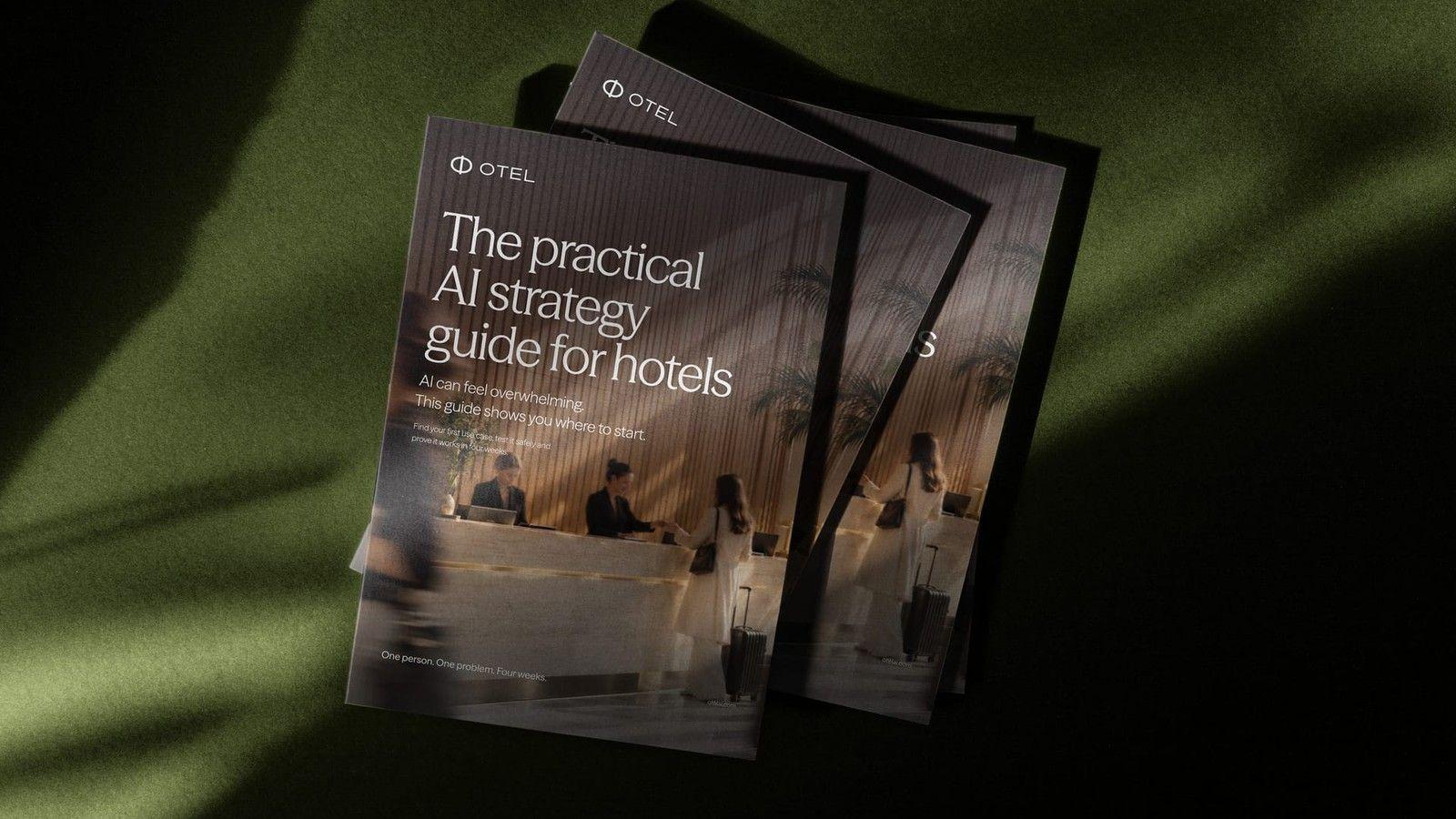
The practical AI strategy guide for hotels: the 2027 edition
The practical AI strategy guide for hotels is out as the 2027 edition. It answers one question: where do you start? Find the work, choose one use case, prove it in shadow for four weeks, then decide from evidence. Ten print-ready templates come with it.
 Tadhg McNealy·22 Oct 2026

The One Line Item Every Hotel Needs in Their 2027 AI Budget
To budget for AI in your hotel’s 2027 plan, start by picking one task your team handles. Assign it an owner (could be you), a budget, and a four-week trial before committing to a full year. Include four key items in that budget line: the supplier fee, setup costs, internal staff time, and a firm decision date. Finally, measure success by tracking two metrics: the hours returned to your team and the direct revenue you can trace back to it.
Tadhg McNealy·20 Oct 2026
Personalisation That Pays: The Version Hotels Actually Need
Everyone's selling hotels personalised guest experiences. Almost none of them ask whether your team's own systems understand your hotel first, and that gap is where the real revenue is leaking.
 Paul Ryan·25 Aug 2026