
The One Line Item Every Hotel Needs in Their 2027 AI Budget
To budget for AI in your hotel’s 2027 plan, start by picking one task your team handles. Assign it an owner (could be you), a budget, and a four-week trial before committing to a full year. Include four key items in that budget line: the supplier fee, setup costs, internal staff time, and a firm decision date. Finally, measure success by tracking two metrics: the hours returned to your team and the direct revenue you can trace back to it.

To budget for AI in your hotel’s 2027 plan, start by picking one task your team handles. Assign it an owner (could be you), a budget, and a four-week trial before committing to a full year. Include four key items in that budget line: the supplier fee, setup costs, internal staff time, and a firm decision date. Finally, measure success by tracking two metrics: the hours returned to your team and the direct revenue you can trace back to it.
Someone in your budget meeting will ask what the AI line is for. If the answer is a round number and a hope, it'll either get cut or get spent on nothing in particular. The rest of this post is to help you to give a better answer.
Choose the job first
Every morning, someone on your team manually checks the same things: daily pickup against budget, the commercial report, stale rate restrictions that shouldn't still be live, and payroll hours against the rota. Pick the one that drains the most time- or costs the most when missed.
Unsure where to start? Use the workflow in our Practical AI strategy guide for hotels to rank them.
What goes in the line
Four things: the vendor fee (including onboarding and support), technical setup for your data, your team’s hours during the pilot, and a hard decision date.
The date costs nothing, but it matters most. Without a firm stop date, a trial can drift for months. Before launching, check the data: if the numbers the trial job depends on are wrong or missing, fix them first, or you’ll just end up measuring the mess.
To plan the remaining line items, use the 2027 budget checklist.
Work Out Payback Both Ways
This is where most AI business cases go wrong: conflating time with cash.
AI can pay you back in two ways:
- Time saved: Valuable, but not cash until reallocated.
- Traceable cash: Direct revenue captured (e.g., catching rate errors or unposted charges).
In our guide’s 100-room benchmark hotel, counting both time and cash saved shows a payback period of six months. Count cash alone, and it's nearly two years. That gap is the conversation to have with your finance lead before the budget meeting, not during it.
Bring four numbers to the table:
- Total first-year cost (supplier, setup, and your team's hours);
- Hours returned;
- Traceable cash generated;
- and your hard decision date.
Another tip: show your finance team where the saved hours go—whether covering a vacancy or freeing your revenue lead for group business.
Run a four-week trial
Pick one hotel if you have more than one, and run it beside the way you work now. Someone still does the job by hand, the AI prepares the same thing, and you compare. Keep a log of what it got right and wrong, and how long checking it took.
It won't be perfect on day one. What matters is whether you can see why it got something wrong, and whether that's fixed by week four. Four weeks won't change everything, but it's enough evidence to decide what deserves the next four. A clear no is a good result too: it cost you a month and saved you a year.
Four questions for any supplier
- Which of our systems will it read, and what about the ones with no API?
- Where does each number come from, and can our team verify the source?
- What action happens on its own, and what waits for our approval?
- What does a pilot look like, what is the total trial cost, and does it replace any existing tool?
What about Copilot or ChatGPT?
Plenty of hotels already pay for Copilot or ChatGPT, and it's fair to ask whether that covers it. For a lot of general work, it does: drafting emails, summarising documents, turning notes into minutes and analysing spreadsheets.
The difference is where the data lives and how often it moves. A general AI assistant works on what you paste into it. A daily report still starts with someone exporting from your PMS and the answer can vary from one prompt to another. A job like the morning pickup or payroll vs. the rota require the same exact numbers pulled from the same source systems at the same time every day, with every calculation traceable.
So keep them on separate lines in your budget:
- General AI assistants: A per-seat productivity tool for inboxes and documents.
- Operational AI: Dedicated infrastructure handling daily, repeatable back-office workflows with auditable data.
Where Otel fits
Otel is the operational AI layer that connects your existing systems into a single view.
Ask any number where it came from and it opens to the source. Across hotels running Otel, teams get 20+ hours a week back from manual reporting. It hands your team drafted decisions with traceable sources, and it keeps human in the loop. Nothing goes live without your approval.
Proven ROI: Across properties using Otel, hotel teams recover 20+ hours a week previously lost to manual reporting.
Get the guide · Book a demo → · What is an AI layer?
Common questions
How much should a hotel budget for AI in 2027? Start from one job. Price the pilot and measure it against the hours and cash it returns. A percentage of revenue tells you nothing about either.
Is AI a tech cost or a payroll cost? Budget it as a technology line item, and measure it against the labour hours it gives back.
Do I need to hire an AI specialist? No. You just need an internal owner for that one specific job, usually the person running reports manually today and a firm decision date.
We already have Copilot. Isn't that enough? For writing, summarising and ad hoc analysis, yes. But automating daily data synchronisation across fragmented hotel systems—with an auditable trail—requires dedicated operational infrastructure.
Disclaimer: This article is an operational planning guide. It does not constitute formal financial, tax, or legal advice; verify all specific budget models with your finance lead or accountant.
Continue reading
Related articles
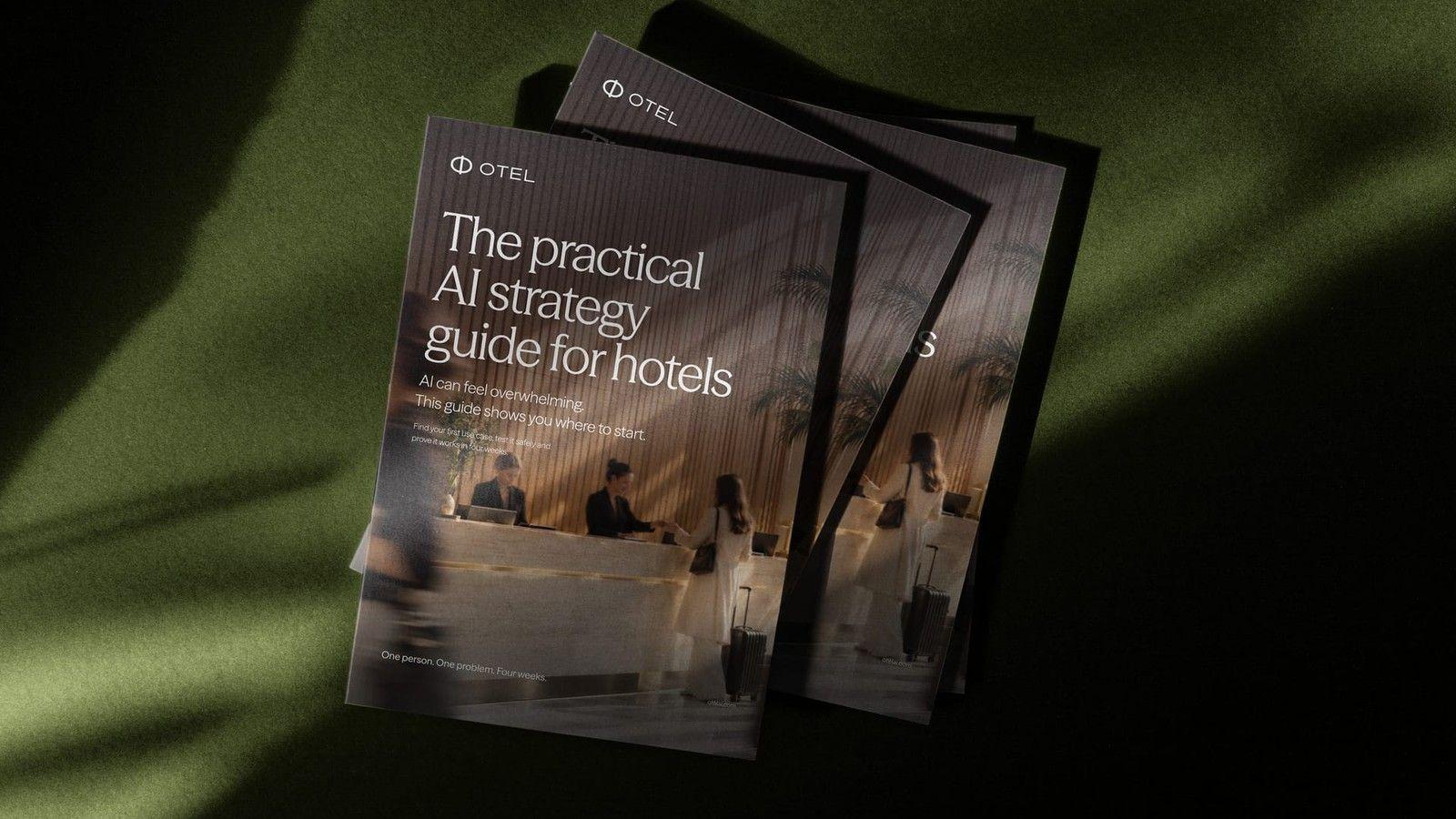
The practical AI strategy guide for hotels: the 2027 edition
The practical AI strategy guide for hotels is out as the 2027 edition. It answers one question: where do you start? Find the work, choose one use case, prove it in shadow for four weeks, then decide from evidence. Ten print-ready templates come with it.
 Tadhg McNealy·22 Oct 2026

Personalisation That Pays: The Version Hotels Actually Need
Everyone's selling hotels personalised guest experiences. Almost none of them ask whether your team's own systems understand your hotel first, and that gap is where the real revenue is leaking.
 Paul Ryan·25 Aug 2026

Vibe Coding and Hotel Operations: What It Means for Your Team
Vibe coding isn't just a developer trend. It's for hotel ops, letting revenue managers and GMs describe what they need in plain English and get it done.
Paul Ryan·6 Jul 2026